To compare the emfs of two given primary cells using a potentiometer.
$21.5
$25.8
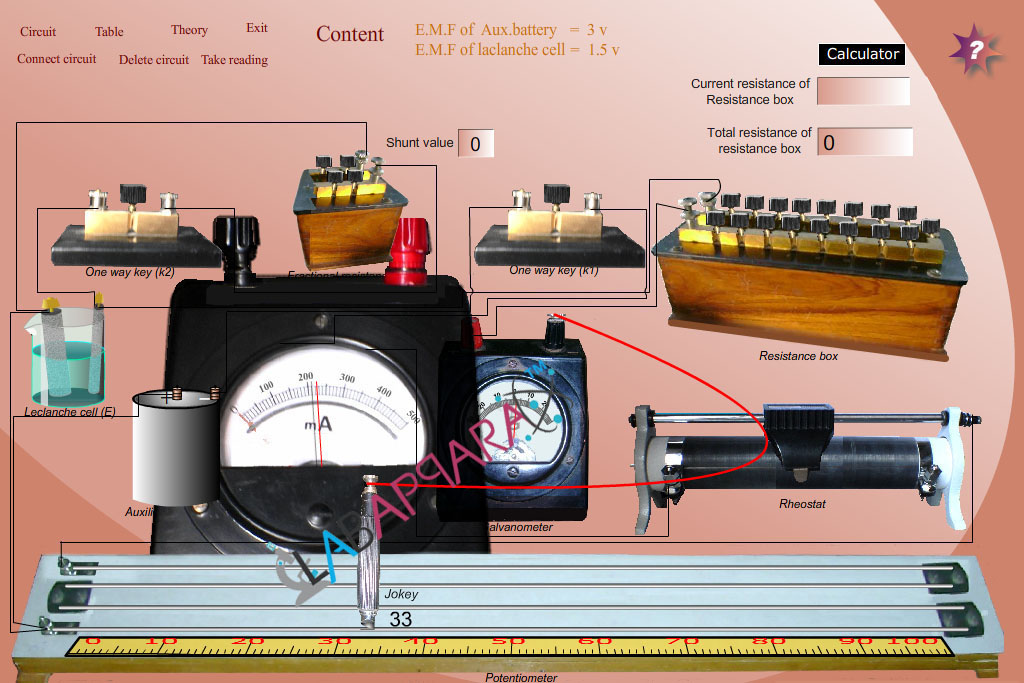
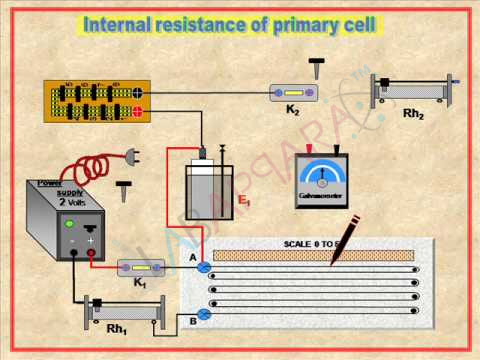
To compare the emfs of two given primary cells using a potentiometer. The potentiometer- Comparison of emf: Theory Potentiometer Potentiometer is a device used to compare the e.m.f. (electromotive force) of two cells, to measure the internal resistance of a cell, and potential difference across a resistor. It consists of a long wire of uniform cross-sectional area and of 10 m in length. The material of wire should have a high resistivity and low temperature coefficient. The wires are stretched parallel to each other on a wooden board. The wires are joined in series by using thick copper strips. A metre scale is also attached on the wooden board. The potentiometer works on the principle that when a constant current flows through a wire of uniform cross sectional area, potential difference between its two points is directly proportional to the length of the wire between the two points. Electromotive force (e.m.f) of a cell Electromotive force (emf) is a measurement of the energy that causes current to flow through a circuit. It is the energy provided by a cell or battery per coulomb of charge passing through it. It can also be defined as the potential difference across the terminals of a cell, when no current flows through it. Electromotive force is also known as voltage, and it is measured in volts. Electromotive force is not truly a force; rather, it is a measurement of energy per unit charge. , where E is the energy and Q is the charge. Using a potentiometer, we can determine the emf of a cell by obtaining the balancing length l. Here, the fall of potential along the length l of the potentiometer wire is equal to the emf of the cell, as no current is being drawn from the cell. Then, or, ; where k is the potential gradient along the wire. Thus it is possible to compare the emf’s of two given cells by measuring the respective balancing lengths l1 and l2. ie; and or Learning Outcomes Students understand the potentiometer apparatus, its parts and how to use it. Students learn the concept of electromotive force in cells. Students are able to construct circuits based on circuit diagrams. Students understand the different components used in the experiment.