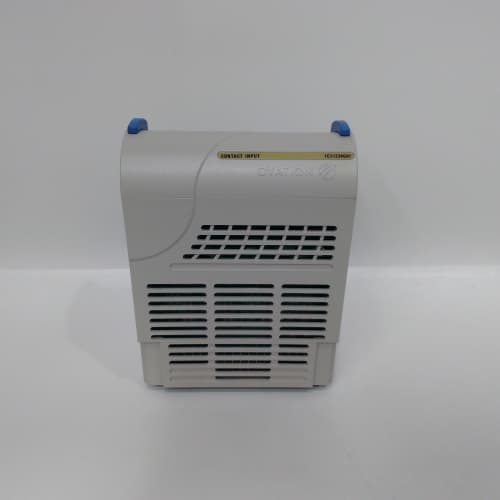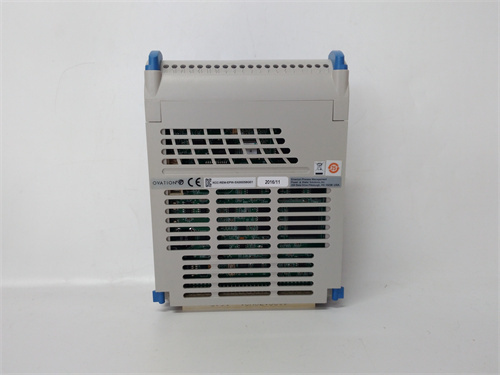
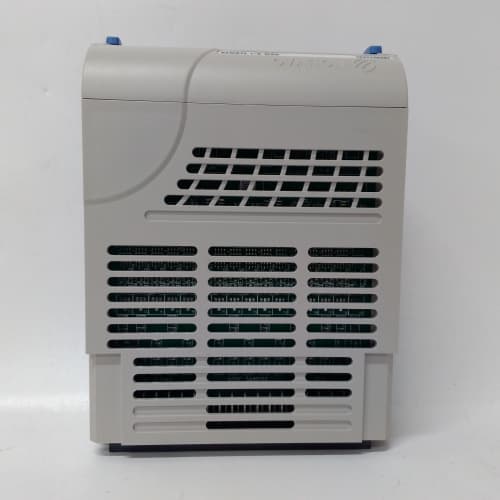
WESTINGHOUSE 1C31179G02 | Ovation Digital Output Module 8-Channel
$ 96.54
Description Key Technical Specifications Parameter Specification Part Number 1C31179G02 Product Type Digital Output Module – Relay Series Ovation DCS Channels 8 outputs Output Type Form C relay contacts (SPDT) Contact Rating 5A @ 120/240V AC, 5A @ 30V DC, 0.5A @ 125V DC Contact Material Silver alloy (gold flashed optional) Isolation Channel-to-channel, channel-to-backplane Operating Voltage Field voltage independent (dry contacts) Switching Time 10 ms typical operate/release Mechanical Life 10 million operations Electrical Life 100,000 operations at rated load Indicators Per-channel red LEDs (relay energized) Hot Swap Supported (with termination assembly) Power Supply From Ovation backplane (5V logic) Mounting Ovation I/O rack Operating Temp 0°C to 60°C Condition New Surplus (Original Packaging) Product Introduction The WESTINGHOUSE 1C31179G02 is an 8-channel relay output module for the Ovation distributed control system. It provides isolated Form C (SPDT) contact outputs for controlling motor starters, solenoid valves, alarm annunciators, and interposing relays in power generation and industrial process applications. Each channel has independently isolated contacts, allowing mixing of different field voltages within the same module. The 1C31179G02 features per-channel red LEDs to indicate when the relay is energized. Contacts are rated for 5A at common AC voltages and 0.5A at 125V DC, making them suitable for most industrial control loads. The module plugs into any Ovation I/O slot and requires a mating termination assembly for field wiring. This unit is new surplus, factory-sealed in original Westinghouse/Emerson packaging. Ovation components remain critical for power plant maintenance; contact us for current stock and firm pricing. Frequently Asked Questions (FAQ) Q: What’s the difference between 1C31179G02 and other Ovation output modules? A: The WESTINGHOUSE 1C31179G02 uses mechanical relays, while other Ovation output modules (like 1C31234G01) use solid-state outputs. Key differences: 1C31179G02: Isolated dry contacts, handles AC or DC, higher current (5A), but slower (10 ms) and limited electrical life Solid-state modules: Faster response, longer life, but typically DC-only, sourcing outputs, lower current The 1C31179G02 is preferred when you need isolation, AC loads, or direct control of motor starters. Solid-state is better for high-speed DC applications. Choose based on your load type and switching frequency. Q: What does Form C mean on the 1C31179G02? A: Form C contacts are SPDT (single pole, double throw)—they have three terminals: common (C), normally open (NO), and normally closed (NC). When the relay is de-energized, common is connected to NC. When energized, common switches to NO. This gives you flexibility: you can use the NO contact to turn something on, the NC contact to turn something off, or both for different functions. The 1C31179G02 provides full Form C on all 8 channels—useful for applications needing both ON and OFF signals from one output. Q: Can the 1C31179G02 switch 120V AC motor starters directly? A: Yes, within limits. Each relay contact is rated 5A at 120V AC. Most small motor starters (NEMA size 0-1) have coil currents under 2A, so direct control is fine. For larger starters, use the 1C31179G02 to drive an interposing relay, which then controls the starter. Also consider: Inductive loads (contactors) need snubbers across the coil Inrush current can exceed steady-state rating—check starter datasheet For frequent cycling, electrical life may be reduced In power plants, we often used 1C31179G02 directly for small motor control and interposing relays for larger motors. It’s reliable if you respect the ratings. Q: What do the red LEDs on the front indicate? A: Each of the 8 channels has a red LED that illuminates when the relay is energized (command from controller). If the LED is ON but the field device doesn’t operate: Check field power to the load (the relay is just a contact—it doesn’t provide power) Verify wiring to NO or NC terminals (correct contact for your application) Check load (open coil, blown fuse) If the LED is OFF but the controller shows output ON, the 1C31179G02 may have a failed relay driver or the module is not receiving command. In my experience, 90% of “output not working” issues trace to field wiring or power, not the module. Check the basics first. Q: Is the 1C31179G02 hot-swappable in a live Ovation rack? A: Yes, with the termination assembly in place. The WESTINGHOUSE 1C31179G02 supports hot-swapping—you can pull the electronics module while the TA remains wired and powered. However: All 8 relays de-energize during the swap (contacts open) The controller sees module fault and may take configured fail-safe actions For critical equipment (pumps, valves), ensure they’re in a safe state before swapping I’ve swapped 1C31179G02 modules live in power plants, but always with operator approval and equipment in manual. The hardware handles it fine; the process doesn’t like losing control outputs. Hot-swap capability is for convenience, not for routine maintenance on live critical loops. Q: What termination assembly works with the 1C31179G02? A: The WESTINGHOUSE 1C31179G02 requires a mating termination assembly (TA) for field wiring. Common options include: 1C31180G01 (standard 8-channel TA with screw terminals for relay outputs) 1C31180G02 (8-channel TA with compression terminals) Other variants depending on wire size and termination type The TA mounts on DIN rail, and the 1C31179G02 plugs into it from the front. You never wire directly to the module. If you’re replacing an existing module, the TA stays in place—just swap the electronics. Always verify your TA model matches the wiring configuration. Q: Can the 1C31179G02 switch DC loads like 24V solenoids? A: Yes, but with caution. The contacts are rated 5A at 30V DC, so 24V solenoids under 5A are fine. However, DC switching is harder on contacts than AC—DC arcs don’t self-extinguish at zero crossing. For inductive DC loads (solenoids, relays), you MUST install a flyback diode across the load to protect the contacts. Without it, arcing will erode the contacts and shorten life dramatically. The 1C31179G02 contacts will work, but external suppression is required for reliable long-term operation. Q: What’s the typical failure mode for 1C31179G02 modules? A: In my experience with Ovation systems: Relay contact wear—after many operations (mechanical life limit) Contact welding—from switching high inrush or shorted loads Relay coil failure—the internal relay coil opens Driver transistor failure—the circuit that energizes the relay The WESTINGHOUSE 1C31179G02 is robust, but relays are mechanical devices—they wear out. If one channel fails (won’t energize or won’t de-energize), the module is damaged—replace it. For frequently cycled outputs (modulating control, periodic starts), consider solid-state modules for longer life. For occasional on/off control, the 1C31179G02 lasts for decades. Q: Does the 1C31179G02 require external power for the field contacts? A: No. The 1C31179G02 provides dry contacts only—no power is supplied by the module. You must provide external power to the load from a separate source (120V AC, 24V DC, etc.) and switch it through the relay contacts. This is a key difference from solid-state output modules that source voltage. The relay just opens and closes the circuit; the power comes from your field supply. Always fuse the load appropriately. Q: Can I mix different voltages on different channels of the same module? A: Yes, absolutely. The 1C31179G02 has channel-to-channel isolation, so each relay’s contacts are independent. You can have: Channel 1 switching 120V AC for a motor starter Channel 2 switching 24V DC for a solenoid Channel 3 switching 125V DC for an alarm All in the same module. This is a major advantage of relay outputs. Just ensure each channel’s wiring is rated for the voltage used, and keep wiring segregated to avoid crosstalk. The module doesn’t care; the field wiring does. Q: What’s the difference between 1C31179G02 and 1C31179G01? A: The G02 suffix typically indicates a hardware revision or enhanced version. 1C31179G02 includes: Updated component sourcing Improved contact material (possibly gold-flashed for low-level switching) Enhanced EMC protection Longer contact life The older 1C31179G01 may be obsolete or have different characteristics. Always match the exact part number from your existing system. Swapping a G01 for a G02 usually works and is often an improvement, but verify with Emerson’s compatibility documentation. In critical power plant applications, we prefer to match revisions exactly. Q: What maintenance does the 1C31179G02 require? A: Minimal but important: No routine maintenance for the electronics Relay contacts are sealed—no field cleaning possible If a channel fails, replace the module For critical applications, cycle test during outages (verify each output operates) Check termination assembly connections for tightness annually The WESTINGHOUSE 1C31179G02 is “fit and forget” until it fails. Unlike solid-state outputs, relays have finite life. If you have outputs that cycle frequently (every few minutes), track operation count and replace proactively before contact wear causes failure. For occasional use, they’ll outlast the plant. TC-PCIC02 plc TK-PRR021 PLC MC-TSIM12 PLC TK-ODD321 PLC TK-OAV081 PLC TK-IDD321 plc TK-IAH161 PLC 140CRP93200 Email: [email protected] Phone: 86 15340683922 Sales:Wu Jiedong Our products are guaranteed for 1 year, with new and original production stopped and imported spare parts. All prices listed on the official website are subject to confirmation by contact: Wu Jiedong (manager). Our product: brand new original packaging Our warranty: All new or repaired parts have a 12 month warranty period beginning Our payment: 100% telegraphic transfer of inventory items before shipment, conditions can be proposed! If you have any downtime spare parts that you cannot find, please feel free to call or use email to contact me. If there are issues that the product cannot solve, please contact me. Product prices can be negotiated. Please do not consider contacting me!