WESTINGHOUSE 1B30023H01 | Westinghouse 1B30023 | WDPF Analog Input
$ 91.51
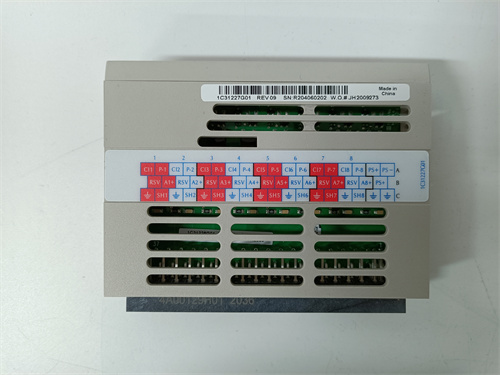
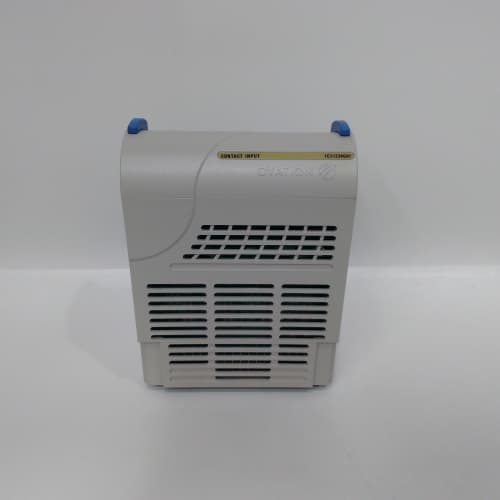
Description Key Technical Specifications Given the age and proprietary nature of Westinghouse WDPF systems, exact specifications for the 1B30023H01 are difficult to source without original documentation. However, based on the part numbering scheme and typical WDPF module characteristics, the following are likely parameters: Parameter Specification Part Number 1B30023H01 Product Type WDPF I/O Module (likely analog input) Series Westinghouse WDPF Form Factor WDPF proprietary rack mounting Input Channels Typically 8 or 16 channels (analog) Input Signal 4-20 mA or 1-5V DC (field-selectable) Resolution 12-bit typical for era Isolation Channel-to-channel isolation unlikely; group isolation typical Backplane Interface Westinghouse proprietary backplane connector Power Supply 5V and ±15V or 24V from rack backplane Indicators Status LED for module health and communication Communication Westinghouse proprietary WDPF bus Operating Temp 0°C to 60°C (32°F to 140°F) typical Condition New Surplus (obsolete, limited stock) Certifications CSA, UL (for era) Product Introduction (Anti-Template) The WESTINGHOUSE 1B30023H01 is a ghost from the pre-Emerson era—a genuine Westinghouse WDPF module. WDPF (Westinghouse Distributed Processing Family) was one of the first true distributed control systems, installed in countless power plants and industrial facilities from the 1980s through the 1990s. If you’re maintaining one of those plants, you know the drill: the original Westinghouse nameplate is still on the cabinets, and Emerson now provides support (sort of), but the hardware is long obsolete. The 1B30023H01 follows the classic Westinghouse numbering: 1B indicates a board assembly, 30023 is the base model, H01 is the revision. Likely an analog input module—probably 8 or 16 channels, 4-20 mA, 12-bit resolution, which was state of the art thirty years ago. The challenge? Finding one that’s not pulled from a decommissioned plant. “New Surplus” means this sat on a shelf for decades; the electrolytic capacitors may need reforming before use. And if you need the mating connector or termination panel, good luck—those are even harder to source. Installation & Configuration Guide This is a legacy module for a proprietary rack system. If you’re swapping one in a live plant, you already know the WDPF toolkit. For the rare case you’re installing this in a maintained system, here’s the drill. Phase 1: Pre-Installation: ⚠️ Isolate the WDPF rack power. Westinghouse racks often had multiple power feeds; lock out all sources. Wait 5 minutes for capacitor discharge. Tools: Small flathead for terminal screws (if on module), #1 Phillips for rack mounting, multimeter, ESD strap. Critical: Document the existing module’s position in the rack. WDPF racks are slot-addressed; swapping slots changes I/O mapping. Photograph any jumper settings on the old 1B30023H01—Westinghouse modules often used jumpers for current/voltage selection, range, or termination. Phase 2: Removal: Locate the module in the WDPF rack. It’s held by two captive screws at the top and bottom of the faceplate. Loosen them. Pull the module straight out using the ejector handles—it disconnects from the backplane. Inspect the backplane connector pins inside the rack. Westinghouse used gold-plated edge connectors; look for corrosion or bent pins. Clean with contact cleaner if necessary. Phase 3: Installation: ESD strap on. Align the new WESTINGHOUSE 1B30023H01 with the card guides in the same slot. Slide it in until the backplane connector seats. It should require firm pressure at the end. Tighten the captive screws—just snug; overtightening strips the rack threads. CRITICAL: Replicate any jumper settings from the old module. For analog inputs, jumpers often select between 4-20 mA and 1-5V, or set the input range (e.g., 0-10V vs ±10V). Wrong settings here and your readings will be garbage or the module may be damaged. Phase 4: Power-On & Testing: Re-energize the rack power. Observe the front-panel LED. On WDPF modules, a steady green typically indicates “OK” and communication with the data highway. Flashing or red means trouble. Access the WDPF engineer’s workstation (if still running) and navigate to the I/O status screen. Verify the 1B30023H01 is recognized and shows no faults. Inject a known 4-20 mA signal at the field termination and verify the reading in the control system matches. If it’s off by a scale factor, check the range jumpers and software scaling. Frequently Asked Questions (FAQ) 1. Is WESTINGHOUSE 1B30023H01 the same as the Emerson version? Sort of. Emerson acquired Westinghouse’s process control business, but the 1B30023H01 is pure Westinghouse—manufactured before the acquisition. Later, Emerson continued selling some WDPF-compatible modules under the Emerson brand, but with different part numbers. This unit is the original Westinghouse article. If your system is an original WDPF, this is the correct spare. If it’s an Emerson-branded WDPF retrofit, it should still work, but verify compatibility with your backplane revision. 2. Can I still get these from Emerson directly? No. Emerson officially declared WDPF obsolete years ago. They offer migration paths to Ovation, but not new old-stock parts. Your only sources are surplus dealers, plant decommissioning sales, or brokers specializing in legacy automation. The 1B30023H01 is hard to find, and prices reflect scarcity. 3. What’s the expected remaining life of this NOS module? New Old Stock means it’s never been powered, but electrolytic capacitors age on the shelf. After 20-30 years, capacitors can dry out or the oxide layer degrades. When first powered, they may fail short or take time to “reform.” Best practice: before installing in a critical rack, power the module on a bench with current-limited supply for 24-48 hours (forming). Monitor for excessive current draw or heat. If it survives that, it’s likely good for years. 4. My plant has several WDPF racks. Should I stockpile these? If you’re committed to running WDPF for another 5-10 years, yes. But do the math: the cost of buying a stash of 1B30023H01 modules versus the cost of a partial migration to Ovation or another modern DCS. At some point, the risk of a catastrophic rack failure (unobtainable backplane) outweighs the spare parts strategy. Many plants run WDPF until a major failure, then migrate that unit. 5. How do I configure the jumpers on the 1B30023H01? Without the original manual, you’re reverse-engineering. Typically, Westinghouse used a matrix: jumper positions 1-4 might select input type, 5-8 range, etc. Look for silkscreen markings near the jumpers: “I/V” for current/voltage, “RNG” for range, “E” for enable. If you have an existing working module, photograph it and copy exactly. If not, you may need to trace the circuit or experiment carefully with a bench supply. 6. The module passes power-on but reads all channels as zero. What’s wrong? Possible causes: Field power missing: analog inputs often need 24V loop power from the termination panel. Check the fuse on the termination assembly. Jumper settings: if the module expects 4-20 mA but jumpers are set for voltage, you’ll read zero. Verify and adjust. Backplane connection: reseat the module; corrosion on edge connector can interrupt signal paths. Dead input mux: if one channel works and others don’t, the analog multiplexer chip may be dead. Less common, but possible on old CMOS. 7. Is there a modern replacement that drops into the same slot? No. WDPF used a proprietary backplane and communication protocol. No modern module speaks “WDPF” natively. The only way to replace a 1B30023H01 is with another WDPF module or a complete migration of that rack to a new I/O system with gateway to the old data highway. Emerson’s migration path typically involves replacing the WDPF highway with Ovation and using interface cards to legacy I/O—expensive, but possible. 5A22411H01 PLC EMERSON EMERSON 5A22412H01 PLC EMERSON 5A22727G02 EMERSON 5A22727G03 EMERSON 5A22971G01 PLC EMERSON 5A22982G01 PLC Email: [email protected] Phone: 86 15340683922 Sales:Wu Jiedong Our products are guaranteed for 1 year, with new and original production stopped and imported spare parts. All prices listed on the official website are subject to confirmation by contact: Wu Jiedong (manager). Our product: brand new original packaging Our warranty: All new or repaired parts have a 12 month warranty period beginning Our payment: 100% telegraphic transfer of inventory items before shipment, conditions can be proposed! If you have any downtime spare parts that you cannot find, please feel free to call or use email to contact me. If there are issues that the product cannot solve, please contact me. Product prices can be negotiated. Please do not consider contacting me!